The First Networks

The internet began as a small military-funded experiment, not as a product. In 1969, four American universities linked their computers together in a network called ARPANET, and the first message ever sent across it was the two letters "lo" — the start of the word "login", cut short when the receiving computer crashed. This guide explains how packet switching, the idea at the heart of that network, grew into the internet we use today.
In short
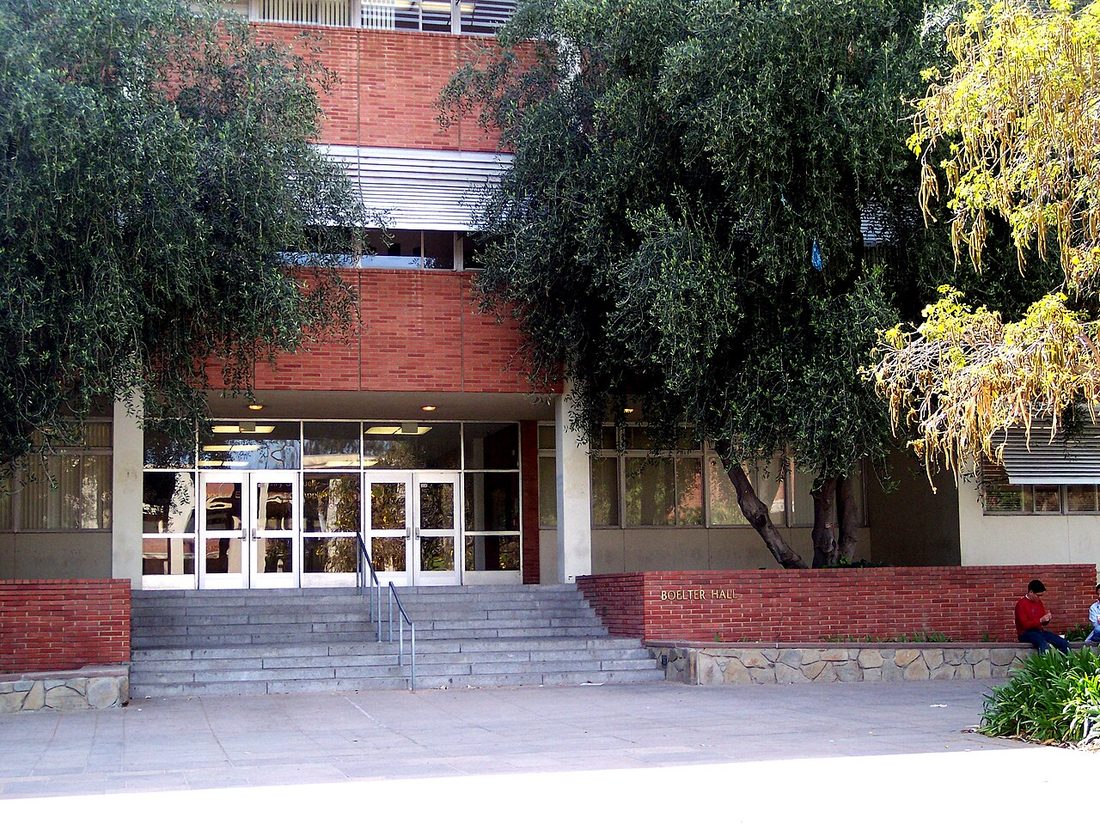
On 29 October 1969, at 10:30 pm Pacific time, a student at UCLA named Charley Kline sent the first host-to-host message over ARPANET to a computer at the Stanford Research Institute. He typed "login", but the Stanford machine crashed after the first two letters, so "lo" became the first message ever sent over the internet. ARPANET used packet switching — breaking data into small packets that travel separately and are reassembled at the other end — and by the end of 1969 it linked four sites: UCLA, Stanford, UC Santa Barbara, and the University of Utah.
Why a new kind of network was needed
In the 1960s, computers were huge, expensive machines that mostly worked alone. The US Department of Defense's Advanced Research Projects Agency (ARPA) wanted researchers at different universities to share computing power, but the telephone network of the time was a poor model: a phone call holds one circuit open for the whole conversation, even during long silences. ARPA's Larry Roberts instead adopted packet switching, an idea developed independently by Paul Baran in the United States and Donald Davies in Britain. Data would be chopped into small packets, each labelled with its destination, and sent across shared lines; if one route failed, packets could take another. The network could survive damage, and many users could share the same lines at once.
The first four nodes
ARPA awarded the contract to build the network's switching computers, called Interface Message Processors, to the firm Bolt Beranek and Newman (BBN) in late 1968. The first node went live at UCLA in September 1969, under Leonard Kleinrock, who ran the Network Measurement Center there. Stanford Research Institute followed in October, UC Santa Barbara in November, and the University of Utah in December. The links between them ran at 56 kilobits per second — about a thousand times slower than a typical home connection today, and slow enough that sending a single photograph would have taken minutes. The first successful message, on 29 October 1969, was sent between UCLA's SDS Sigma 7 computer and Stanford's SDS 940. An hour after the crash, Kline tried again and the full word "login" went through.
From ARPANET to the internet
ARPANET grew quickly: by 1971 it had 15 nodes, and by 1973 it had crossed the Atlantic to England and Norway. But it was still one network, and other networks were appearing with their own rules. In 1974, Vint Cerf and Bob Kahn published the design for TCP, a protocol that let different networks talk to each other — the idea that turns many networks into an "internet". TCP later split into TCP and IP, and on 1 January 1983 ARPANET switched over to TCP/IP entirely, a date often called the birth of the modern internet. ARPANET itself was switched off in 1990, by then replaced by the NSFNET backbone that carried the growing commercial internet. The packet-switching idea, though, never went away: every email, video, and web page you receive still arrives as packets, reassembled by your device.
What the pioneers got right — and wrong
The designers of ARPANET assumed a small community of trusted researchers, so the early network had almost no security built in — a choice the world is still paying for, in spam, fraud, and hacking. But they got the big idea right: a network with no single centre, where intelligence sits at the edges and the core simply moves packets, is hard to break and easy to extend. That design is why the internet could grow from four university computers to billions of devices without ever being redesigned from scratch.
Sources: Wikipedia, "ARPANET"; ICANN, "The First Message Transmission", by Leonard Kleinrock; MIT OpenCourseWare, "Internet Research Problems", Lecture 2 Checked 27 November 2026.